
Logging / Evidence Guide
The Minimum Effective Workout Log
A useful log is not a diary of everything. It is the smallest record that lets you make a better decision next time.
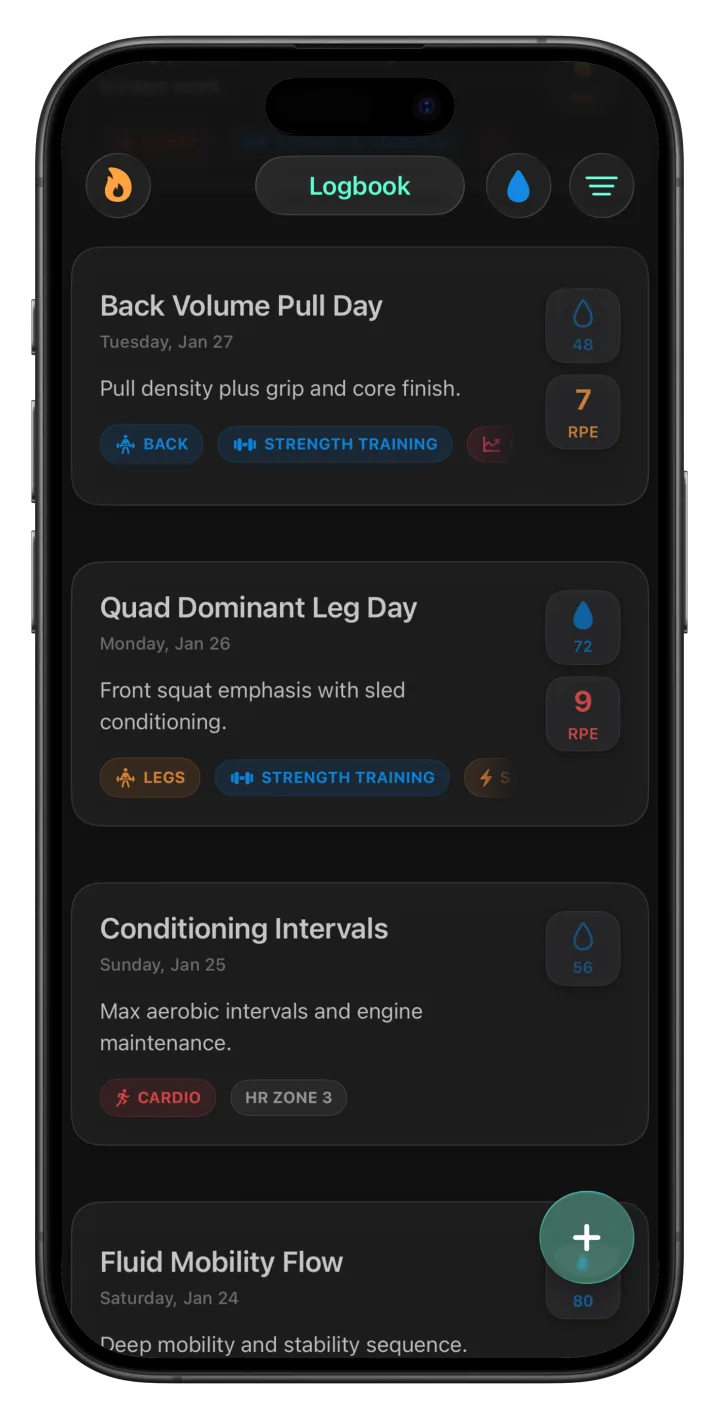
The bad log is either too thin or too heroic.
A thin log says, "bench day." It remembers the category but loses the signal. A heroic log records everything so aggressively that you stop using it by Thursday. The minimum effective workout log lives between those two failures.
The research does not say you need a beautiful spreadsheet. It says resistance training outcomes depend on variables such as volume, load, intensity of effort, progression, and recovery. A 2026 ACSM overview of reviews reinforces that resistance training prescription should be specific to the outcome, and a 2023 network meta-analysis found that many prescriptions improve strength and hypertrophy, with dosage still mattering.
That means the goal is not perfect tracking. The goal is enough signal to know whether the next session should add load, add reps, repeat, reduce fatigue, or change technique.
The five fields that matter.
For most lifters, the useful log is five layers deep:
- Exercise: the movement and useful variation, not just a muscle group.
- Sets, reps, and load: the base units of progressive overload.
- Effort: RIR, RPE, or a short note like "easy triple" or "grinder."
- Technique flag: one thing that changed the quality of the rep, such as depth, bar path, tempo, or pain-free range.
- Context: sleep, soreness, missed warm-up, travel, unusually long rest, or anything that would make the number misleading.
Sets, reps, and load tell you what happened. Effort and context tell you what it meant.
The useful workflow is messy input first, structure second. A lifter should be able to say, "squat 315 for 5, 5, 4, last one ugly, slept 5 hours," and still preserve the signal that can guide the next day.
Volume is useful, but only if you know what counted.
Weekly set volume is one of the easiest training variables to misunderstand. Schoenfeld, Ogborn, and Krieger reported a dose-response relationship between weekly resistance training volume and muscle mass gains. That does not mean every set in your notes deserves equal weight.
A rushed set six reps away from failure, a paused tempo set near failure, and a sloppy ego set can all appear identical if your log only says "3x10." That is the trap. Volume becomes more useful when it is attached to effort and quality.
The minimum log does not need a lab-grade fatigue score. It needs enough detail to stop treating every completed set as equally productive.
Recovery context prevents fake conclusions.
Sleep and nutrition are not moral categories. They are context. The International Society of Sports Nutrition position stand gives broad protein targets for active people, and sleep consensus work in athletes treats sleep as part of performance and recovery. You do not need to over-track either one for a workout log to benefit from context.
A note like "low sleep" or "missed meal" is enough to keep the coach from overreacting to one bad top set. Without context, a normal recovery problem can look like a program problem.
The log should change tomorrow.
A workout log is not valuable because it preserves the past. It is valuable because it changes the next decision. The next useful action is usually one of four things:
- Add a rep or small load because the work was completed with room.
- Repeat the same target because effort was high but quality held.
- Pull volume back because recovery context explains the miss.
- Change the movement cue because the number improved while technique degraded.
If your log cannot support one of those choices, it is probably either too vague or too bloated. A good system sits in the middle: capture the messy note, structure the training signal, and make the next session obvious.
Sources
- American College of Sports Medicine. Resistance Training Prescription for Muscle Function, Hypertrophy, and Physical Performance in Healthy Adults: An Overview of Reviews. PubMed
- Currier BS, et al. Resistance training prescription for muscle strength and hypertrophy in healthy adults: a systematic review and Bayesian network meta-analysis. PubMed
- Schoenfeld BJ, Ogborn D, Krieger JW. Dose-response relationship between weekly resistance training volume and increases in muscle mass. PubMed
- Jager R, et al. International Society of Sports Nutrition Position Stand: protein and exercise. Journal of the International Society of Sports Nutrition
- Walsh NP, et al. Sleep and the athlete: narrative review and 2021 expert consensus recommendations. PubMed